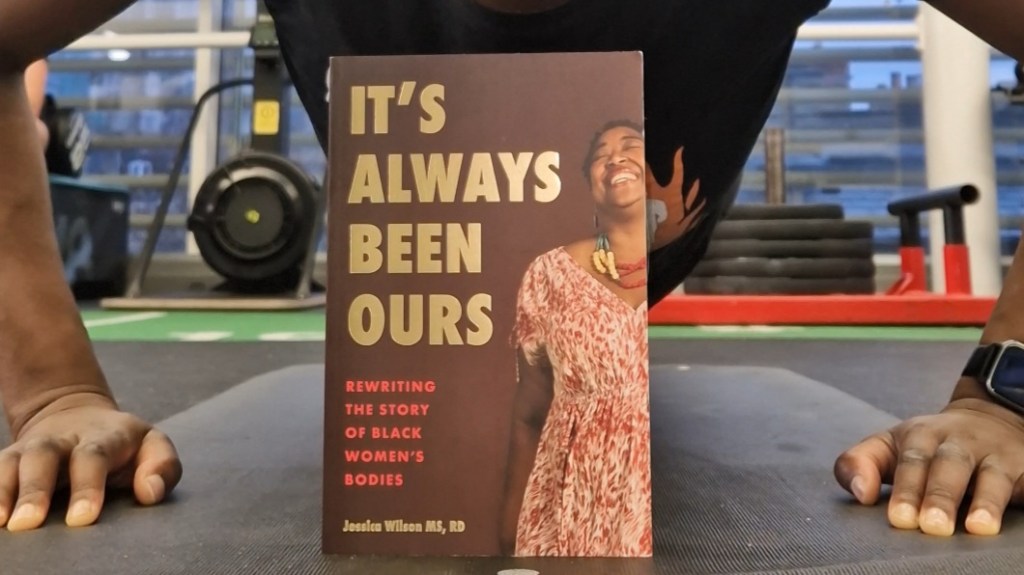

THE PLOT: ‘It’s Always Been Ours’ by Jessica Wilson is non-fiction about Black women’s bodies. A clinical dietitian, Wilson examines how Black women are treated by the medical, diet and wellness industries, particularly in regards to eating disorder recovery.
SUMMARY: This book is essential reading if you want to examine the structural iniquities in health and wellness. By looking at specific issues through the lens of fat, queer, Black women, the author uncovers several biases within our perceptions of health and demonstrates how most ED recovery or weight management tools and frameworks do not serve vast swathes of the population. So much of this book spoke to me and I found it articulated my own thoughts and shone a light on many assumptions and stereotypes that I unconsciously hold. Put simply, the premise holds that there is an idealised stereotype of health and success which equates to thin, rich, white women. Proximity to that ideal comes with tangible benefits in our society yet many health professionals ignore that reality when working with patients who do not fit that mould. Much of this book chimed with my own experiences of health professionals and I found it deeply moving to see my experiences articulated, explained and validated. That’s why I’m giving this book five stars and recommending it as essential reading.
GOOD BITS: This book profoundly resonated with me and there are far too many elements that I want to highlight. This is truly a book you need to read for yourself because it starts a conversation and allows you to draw your own conclusions. In particular, I felt very connected to the authors’ personal stories of treating Black patients as a dietitian and her workplace struggles in trying to get her colleagues to acknowledge and address the disparities for Black patients. I also enjoyed the section where the author attends a Gwyneth Paltrow “GOOP” event, which was both entertaining and a good way to inhabit and interrogate the wellness ideal.
NOT SO GOOD BITS: There was an extended section towards the end where the author talks wanting the freedom to be “basic”. For some reason, it rubbed me up the wrong way. Perhaps it was just too long, but it felt like some of the comments were “punching down” at people who are less affluent. I don’t know how to describe it, but it just felt like there was an unacknowledged class privilege.
OVERALL: I’d recommend this book to fans of ‘Hunger’ by Roxanne Gay and ‘What We Don’t Talk About When We Talk About Fat’ by Aubrey Gordon. Thank you to Hay House for sending me a #gifted copy in exchange for an honest review.
If you’d like to buy this book, you can support aminasbookshelf and get a discount by using my bookshop.org affiliate link.

 Amina's Bookshelf