
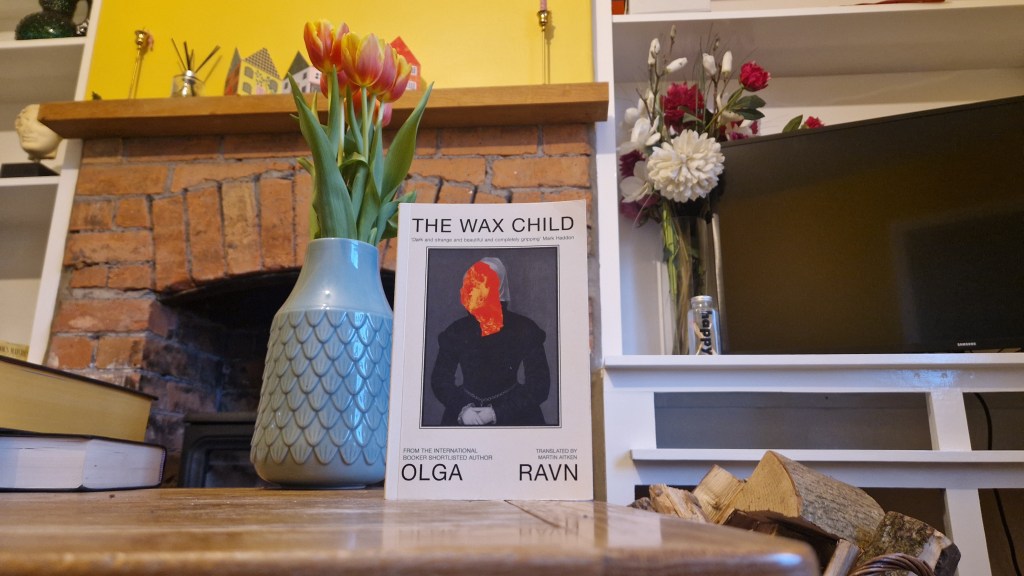

THE PLOT: ‘The Wax Child’ by Olga Ravn (translated by Martin Aitken) is historical literary fiction about an infamous witch trial in 17th century Denmark. In 1620 Christenze Krucklow melts down beeswax and fashions it into a small child. The wax child watches as Christenze and her friends are haunted by rumour and imprisoned in the local jail. Seeing through time and space, the wax child observes everything from the King of Denmark setting new Christian laws in Copenhagen to the smallest leaves in the pine forests. But it cannot change events – it can only bear witness.
SUMMARY: At less than 200-pages, this translated novel feels like a strong shot of vodka on a cold wintry night. Highly atmospheric, you see the changing world through the eyes of the wax child both when it is created and after it is buried in the ground. The use of nature to convey the importance of shifting time is very impactful and it almost feels like the wax child’s existence subtly encroaches on the present day. Based on real events, the novel also makes the reader question what a “witch” is, and the meaning and societal functions of witchcraft (for both women and men). Although I found it a bit repetitive towards the end and I prefer books with stronger plots, I would read more of this author’s work and I’d recommend this book to lovers of unique, literary, descriptive novels.
GOOD BITS: This novel is all about description and metaphor. The expressive and imaginative use of language in this book must have made it very interesting to translate and it feels like an incredible feat of work by the translator to capture the essence of this book in English. I loved the relationship between Maren and Christenze, and that human friendship is what really drew me to this book. I’m all about character dynamics so I also liked how Elisabeth and Dorte exemplified two different types of women who could be drawn into witchcraft.
NOT SO GOOD BITS: I got a bit bored of this novel by the end. Although I hate to say it, perhaps there was a bit of style over substance. There’s only so many times you can read the sentence “and I was the wax child” before and after some obscure event until it seems farcical. I think the amount of repetition and lack of surprise made me lose interest.
OVERALL: I’d recommend this book to fans of ‘The Mercies’ by Kiran Millwood Hargrave, ‘Burial Rites’ by Hannah Kent and ‘Grief is the Thing with Feathers’ by Max Porter. However, I personally preferred all of these comparison titles for their stronger plots and deeper characterisation.
Thank you to Hunting Ravens bookshop in Frome, who gave me this novel as part of their “proof in the pudding” book club. You can purchase this book (with a discount) and support @aminasbookshelf via my bookshop.org. affiliate link.

 Amina's Bookshelf