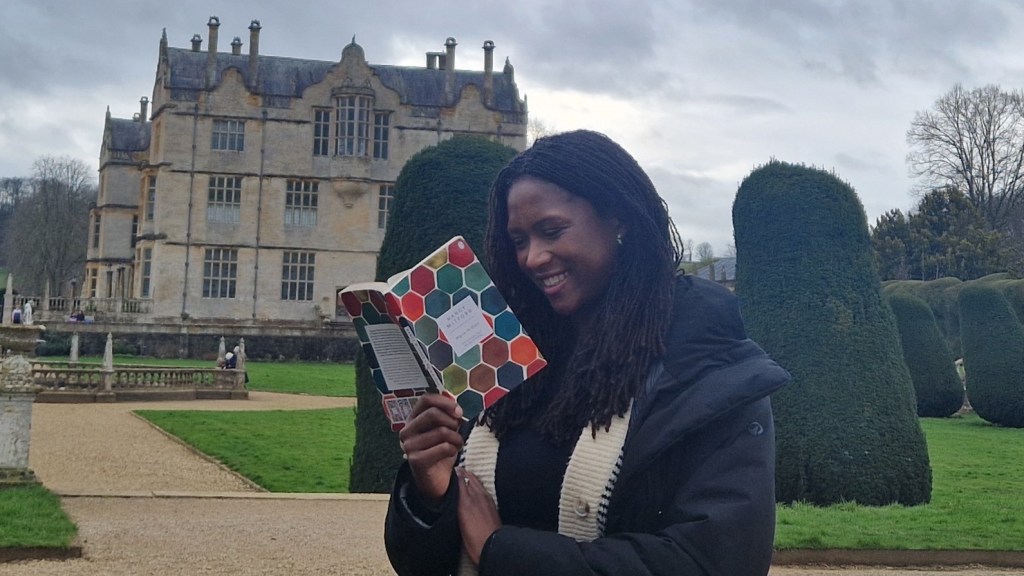

THE PLOT: Wigs on the Green by Nancy Mitford is a classic novel first published in 1935. Noel and Jasper are upper middle-class men in search of heiresses to marry. They visit the small village of Chalford to court Eugenia Malmains, the richest and most eccentric aristocrat of her generation. Brought up in isolation due to the shame of her parents’ divorce, Eugenia is an ardent supporter of Captain Jack and the Union Jackshirts. As Noel and Jasper adopt fascism to get into Eugenia’s good books, they gather a cast of friends in the village and put on a farcical pageant to raise money for the dubious political cause.
SUMMARY: This novel is famous due to its autobiographical nature. Eugenia is a direct parody of the author’s sister, Unity, while Captain Jack is a thinly veiled lampoon of her brother-in-law Oswald Mosely. A sharp satire of the British upper class and a caricature of fascism, the novel serves as a fascinating time-capsule for the inter-war period. This book most resonated with me because it feels scarily timely. I admit, I laughed when Trump first ran for President, yet this novel is a cruel reminder that those we ridicule may be capable of rising to power and inflicting serious harm in the future. While the novel does contain some slurs as part of the depiction of controversial views, I believe it’s essential reading and I was struck by how many of the arguments are still around today. Deliciously funny, the novel delivers its medicine in the milkshake. First and foremost there is an entertaining plot and intriguing characters that make you want to keep reading. And although the ending didn’t have quite the moral diktat that I would’ve liked, the message about the foolishness of extreme nationalism is clear.
GOOD BITS: At its heart this book is a comedic farce, which takes nationalist ideology to the extreme. It’s extremely witty, which makes it a fun book to read despite the sobering political message. Whether it’s the middle-classes trying to climb the social ladder or the upper-classes’ disconnection with the real world, the author is able to incisively depict characters that are just as familiar in the modern-day. In particular, I loved the old folks home for mentally ill aristocrats which is modelled after the house of lords. This cutting critique of the conservative party and the outdated system of hereditary peers is perfectly pitched. In fact, I have to share a quote from the novel to illustrate it.
“These Socialists put a perfectly exaggerated value on human life, you know. Ridiculous. As I said in my speech, what on earth does it matter if a few people are killed, we’re not at war are we? We don’t need ’em for cannon fodder?” – The Duke of Driburgh, page 106
NOT SO GOOD BITS: Spoiler alert – I’m annoyed that the fascists won the fight and Eugenia never learned the error of her ways. I understand not every story can be wrapped up in a bow, but after such a scathing critique the novel seems to accept that the British establishment will always be a bit racist. In fact, terrible ideology doesn’t stop someone from being a ‘good old chap’. The eccentricities of the British aristocracy are accepted and adored even in the secondary characters (for example, Marjorie’s marriage to Mr Wilkins). I don’t want to be anachronistic and perhaps it’s the “eat the rich” late-stage-capitalism that we’re currently living through, but I feel a few tweaks to the final battle and a stronger morality tale in the final chapter would’ve worked well.
OVERALL: I’d recommend this book to fans of Evelyn Waugh, P.G. Wodehouse and Downton Abbey (TV Show). If you love stately homes and period dramas, pick up this novel. If anything, it’s a historical record of 1930’s. You can purchase this book (with a discount) and support @aminasbookshelf via my bookshop.org. affiliate link.

 Amina's Bookshelf