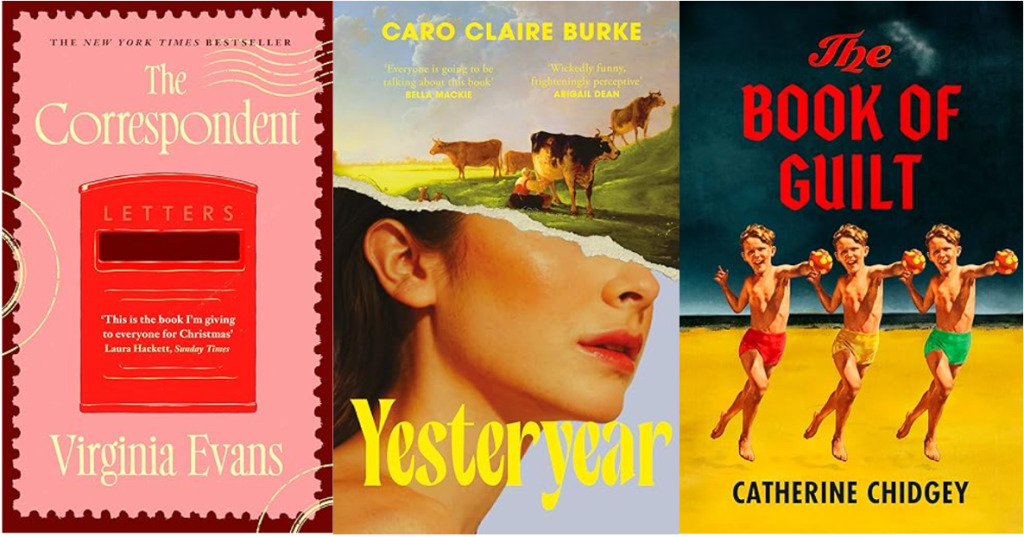
Good things come to those who wait, so while this might be my first round-up of audiobook reviews in 2026, I guarantee that they are all incredible. In fact, I defy any reader to dislike them. If you’re looking for addictive audiobooks with twisty plots, political themes, emotional devastation and complex characters, get yourself on Spotify, or Audible, or Libro FM and download these ASAP. You won’t be disappointed.
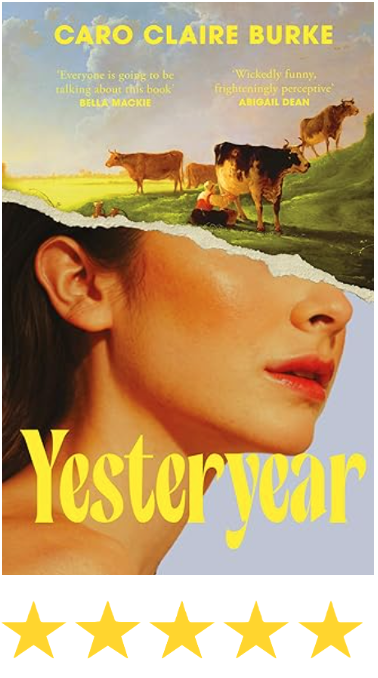
The Plot: ‘Yesteryear’ is an upmarket speculative novel about a tradwife. Natalie lives in a beautifully rustic farmhouse with a handsome husband and six perfect children. Her life is so wonderful, she can’t help but share it with millions of followers. So what if there are nannies and producers behind the scenes? Natalie isn’t just living the good life – she’s building an empire. Until one morning, Natalie wakes up in a life that isn’t hers. Her home, husband and children are all familiar but something’s off. It feels like she’s been transported back to the 1800’s and she’s desperate to find a way out.
The Review: I picked this up because it’s the book everyone’s talking about — and, for once, the hype is justified.
What makes it so addictive is the structure. The story moves between three timelines: Natalie’s unravelling “present-day” life as an influencer, the backstory behind her marriage and rise to prominence, and a strange alternate 1800s life. Each thread is loaded with questions that keep you hooked—how she built her success, potential fallout from her husband’s infidelity, what this 1800s world really means—so you’re constantly trying to piece it all together.
The audiobook does make those shifts a little disorienting at times, especially when jumping into the 1800s timeline without the visual cues of a physical book. But oddly, that worked in its favour. My confusion mirrored Natalie’s own experience, pulling me deeper into her perspective as I tried to make sense of it alongside her.
I’ve seen some criticisms that Natalie’s too unlikeable and arguments that the novel’s critique of “tradwife” culture feels exaggerated as a result. I didn’t see it that way. She’s messy, conflicted, and shaped by faith, family, and social pressure in a way that feels very real. You don’t have to agree with her to understand her layers of difficult emotions.
Even when I thought I had the ending figured out, it still managed to surprise me. And now I’m fully invested. I don’t just want a sequel, I need it. (I’ve heard rumours about ‘The Book of Mary’….).
What could have been a gimmicky take on a trending topic turns out to be a clever, compelling, and unsettling critique of online culture and conservative “values”.
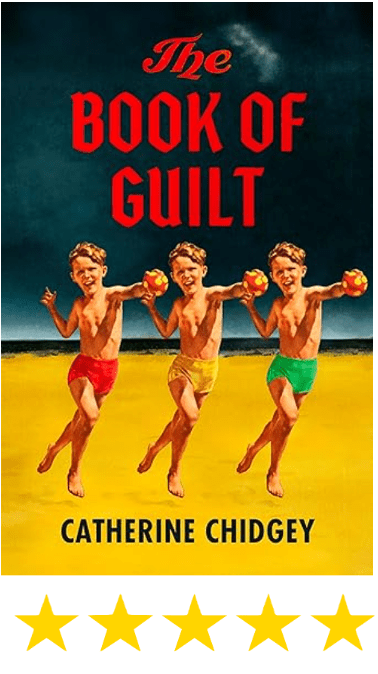
The Plot: ‘The Book of Guilt’ is a speculative alternative fiction where nobody won WWII. In 1979, England, three brothers are the last remaining residents at a children’s home. Part of a government-funded project for orphans, triplets Vincent, Lawrence and William are cared for by three “mothers” who record their misdemeanours and dreams in special books. Every day they must take medicine to protect themselves from a mysterious illness. But when the Government decides to close the orphanage for good, there is a campaign to find adoptive homes for each of the siblings.
The Review: I was completely absorbed by this novel. It’s the kind of book that quietly pulls you in and doesn’t let go.
Shifting seamlessly between historical mystery and gripping thriller, it builds an atmosphere that’s incredibly eerie. With multiple POVs that don’t always seem to connect, the tension builds slowly until there’s a truly staggering climax where everything intersects. It’s hard to say too much without spoilers, but the novel’s alternate history premise — imagining a world where Hitler was assassinated in 1942 — is executed with impressive depth and care. It feels unsettlingly plausible, grounded in sharp political insight and poses big ethical questions that linger long after you’ve finished.
William is a compelling anchor for the novel. The complexity of his relationship with his siblings, Vincent and Lawrence, provide an emotional core to the story. I liked the inclusion of the Minister’s perspective. Although she lacks integrity, her moral complexity makes her a genuinely compelling, flawed character. In contrast, Nancy’s chapters are more disorienting, but that sense of uncertainty feeds into the novel’s mystery in a way that ultimately pays off.
The ending is emotionally devastating in the best way. The setting, the final reveal, the weight of it all—it lands perfectly. I cried (a lot), which is always the clearest sign a book has truly hit home.
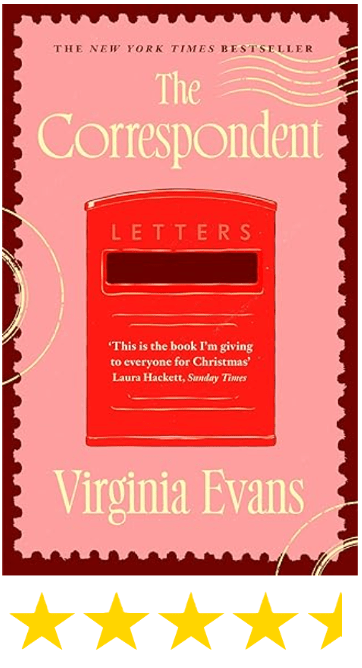
The Plot: ‘The Correspondent’ is a contemporary epistolary novel about an old woman who likes to write letters. Sybil Van Antwerp believes in setting pen to paper. Every day she writes a letter to someone – whether it’s her brother, her best friend, an author she admires, or a customer service agent she does not. When she learns that her eyesight is failing, Sybil is concerned that she won’t be able to read or write anymore. Through the letters, you see a picture of her life – her controversial workaholic thirties, her difficult relationship with her children, and the adoptive family trauma she has always shied away from. As she slowly goes blind, she asks questions and get answers she never would have imagined.
The Review: With a 4.5-star average and half a million ratings on Goodreads, this is clearly a beloved novel and it’s easy to see why.
Its greatest strength is its form. Told entirely through letters, the story gradually reveals Sybil’s life in fragments, inviting you to piece together her past, relationships, and regrets. It’s a clever, immersive structure that feels perfectly suited to a character who keeps people at arm’s length. Sybil isn’t always likeable, but that’s the point. The letters act as both connection and shield, allowing her to communicate while avoiding true vulnerability until her encroaching blindness begins to dismantle those barriers.
There’s something quietly powerful here, especially for anyone who avoids closeness (ahem, who are you looking at?). It’s a reminder that it’s never too late to let people in and take accountability for your mistakes.
Some of the most memorable exchanges are with the Syrian refugee working in customer service; their relationship develops in such an unexpected, moving way, and ties beautifully into the wider story. I also loved the letters to her best friend, which subtly unravel her complicated family life, as well as her determined correspondence about studying literature at a university.
That being said, the ending didn’t quite land for me. A key reveal involving Sybil’s children felt more drawn out than impactful, and the final stretch leaned a little too hard into neatness. What aims for warmth and optimism ends up feeling slightly over-polished, as though every thread needed tying off. It lingers a little longer than necessary and loses a bit of its emotional edge because of it.
You can purchase these books with a discount and support aminasbookshelf via my bookshop.org page:

 Amina's Bookshelf