
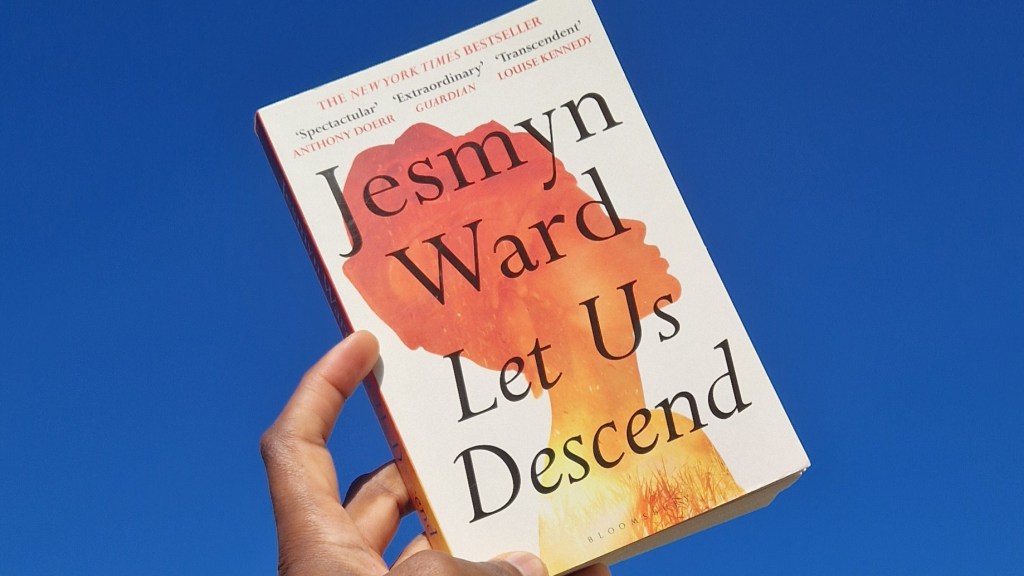

THE PLOT: Let Us Descend by Jesmyn Ward is a historical novel set on a slave plantation. A white enslavers’ illegitimate daughter, Annis has survived on the Carolina plantation due to her mother’s resilience and love. Comforted by stories of her African warrior grandmother, the pair learn how to fight and be strong. But when Annis is sold south by the white enslaver who fathered her, she travels a harrowing journey to the slave markets of New Orleans. Eventually ending up on a fearsome Louisiana sugar plantation, Annis must open herself up to the spirits of water, history and myth to survive.
SUMMARY: Jesmyn Ward is one of my favourite authors and I believe ‘Sing, Unburied Sing’ is a masterpiece, so I expected to love this novel. Unfortunately, it didn’t quite work for me and I’m left ambivalent. It is extremely well-written; there are beautiful sentences and evocative characters. However, I’ve read so many similar slavery narratives that they blur into one. These stories are undoubtedly important and deserve to be told. But from a plot point-of-view, this novel didn’t stand out to me enough. Overall, it was a good read and I’d recommend it. But I don’t have much to say because it didn’t provoke new thoughts or feelings within me.
GOOD BITS: Annis is a very endearing character and her grief after losing her mother was extremely moving. There are so many details in this book, such as Annis comparing herself to her white half-sisters and her fear of incest, which made the novel come to life. The writing is so beautiful and accomplished, I could feel Annis’ pain as she was marched down south. In particular, I was very invested when Annis arrives in New Orleans. The portrait of New Orleans in that era felt unique and curiosity-inducing, so I wished we’d had more of that story and had an intersection with the master’s creole family in the city. When on the new plantation, I loved the characters of the other slaves in the kitchen and relished their relationships with each other. The tension with the mistress and the complexities of her cruelty were also an interesting dynamic.
NOT SO GOOD BITS: The mystical elements with Mama Aza made this story unique but I found my attention wane during some of those segments. They were too abstract for me so the writing felt like vague platitudes rather than poignant symbolism. For my taste, the magical realism distracted from Annis’ character development rather than fuelling it. It felt like a ‘deus ex machina’ rather than change through action of the plot. Ultimately, it took me a long time to read this book because I felt like I was battling through literary prowess rather than being fully absorbed in a plot.
OVERALL: I’d recommend this book to fans of The Underground Railroad by Colson Whitehead, Ours by Phillip B.Williams and Kindred by Octavia Butler. An important book and contribution to the canon, so well-worth reading if this piques your interest.
You can purchase this book (with a discount) and support @aminasbookshelf via my bookshop.org. affiliate link.


